

Ознакомьтесь с этим документом, чтобы получить рекомендации по масштабированию вашего бессерверного приложения до уровня, превышающего тысячи операций в секунду или сотни тысяч одновременных пользователей. Этот документ содержит расширенные разделы, которые помогут вам глубоко понять систему. Если вы только начинаете работать с Cloud Firestore , обратитесь к руководству по быстрому запуску .
Cloud Firestore и мобильные/веб-SDK Firebase предоставляют мощную модель для разработки бессерверных приложений, где клиентский код напрямую обращается к базе данных. SDK позволяют клиентам отслеживать обновления данных в режиме реального времени. Вы можете использовать обновления в реальном времени для создания адаптивных приложений, не требующих серверной инфраструктуры. Хотя запустить приложение очень просто, полезно понимать ограничения систем, составляющих Cloud Firestore , чтобы ваше бессерверное приложение масштабировалось и хорошо работало при увеличении трафика.
В следующих разделах вы найдете советы по масштабированию вашего приложения.
Выберите местоположение базы данных, расположенное как можно ближе к вашим пользователям.
На следующей диаграмме представлена архитектура приложения реального времени:
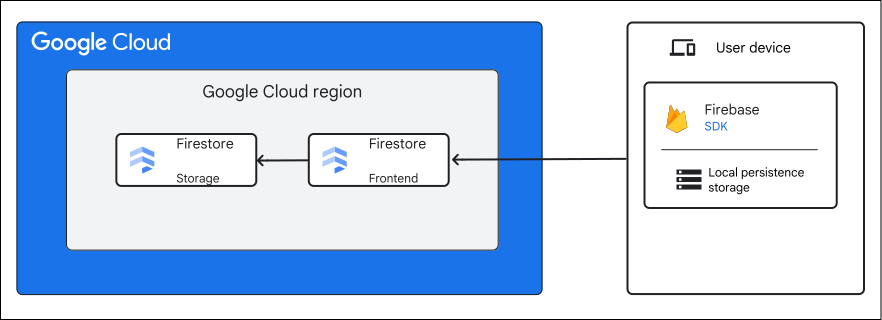
Когда приложение, работающее на устройстве пользователя (мобильном или веб-приложении), устанавливает соединение с Cloud Firestore , это соединение перенаправляется на сервер Cloud Firestore расположенный в том же регионе , что и ваша база данных. Например, если ваша база данных находится в регионе us-east1 , соединение также направляется на сервер Cloud Firestore также расположенный в регионе us-east1 . Эти соединения являются долговременными и остаются открытыми до тех пор, пока приложение явно их не закроет. Сервер считывает данные из базовых систем хранения Cloud Firestore .
Расстояние между физическим местоположением пользователя и местоположением базы данных Cloud Firestore влияет на задержку, которую испытывает пользователь. Например, пользователь в Индии, чье приложение взаимодействует с базой данных в регионе Google Cloud в Северной Америке, может обнаружить, что работа приложения происходит медленнее, а скорость работы ниже, чем если бы база данных находилась ближе, например, в Индии или в другой части Азии.
Проектирование с учетом надежности
Следующие темы улучшают или влияют на надежность вашего приложения:
Включить автономный режим
SDK Firebase обеспечивают сохранение данных в автономном режиме. Если приложение на устройстве пользователя не может подключиться к Cloud Firestore , оно остается работоспособным, используя локально кэшированные данные. Это гарантирует доступ к данным даже при нестабильном интернет-соединении или полной потере доступа на несколько часов или дней. Более подробную информацию об автономном режиме см. в разделе «Включение автономных данных» .
Разберитесь с автоматическими повторными попытками.
SDK Firebase берут на себя повторные попытки выполнения операций и восстановление разорванных соединений. Это помогает обойти временные ошибки, вызванные перезапуском серверов или проблемами в сети между клиентом и базой данных.
Выберите между региональными и многорегиональными локациями.
При выборе между региональным и многорегиональным размещением данных приходится идти на компромиссы. Главное различие заключается в способе репликации данных. Это определяет гарантии доступности вашего приложения. Многорегиональный экземпляр обеспечивает более высокую надежность обслуживания и повышает отказоустойчивость данных, но платой за это является стоимость.
Разберитесь в системе обработки запросов в реальном времени.
Запросы в реальном времени, также называемые обработчиками снимков, позволяют приложению отслеживать изменения в базе данных и получать уведомления с низкой задержкой, как только данные изменятся. Приложение может получить тот же результат, периодически опрашивая базу данных на наличие обновлений, но это часто медленнее, дороже и требует больше кода. Примеры настройки и использования запросов в реальном времени см. в разделе «Получение обновлений в реальном времени» . В следующих разделах подробно рассматривается принцип работы обработчиков снимков и описываются некоторые лучшие практики масштабирования запросов в реальном времени при сохранении производительности.
Представьте себе двух пользователей, которые подключаются к Cloud Firestore через приложение для обмена сообщениями, созданное с использованием одного из мобильных SDK.
Клиент А записывает данные в базу данных для добавления и обновления документов в коллекции под названием chatroom :
collection chatroom:
    document message1:
      from: 'Sparky'
      message: 'Welcome to Cloud Firestore!'

    document message2:
      from: 'Santa'
      message: 'Presents are coming'
Клиент B отслеживает обновления в той же коллекции, используя обработчик снимков. Клиент B получает немедленное уведомление всякий раз, когда кто-то создает новое сообщение. На следующей диаграмме показана архитектура обработчика снимков:
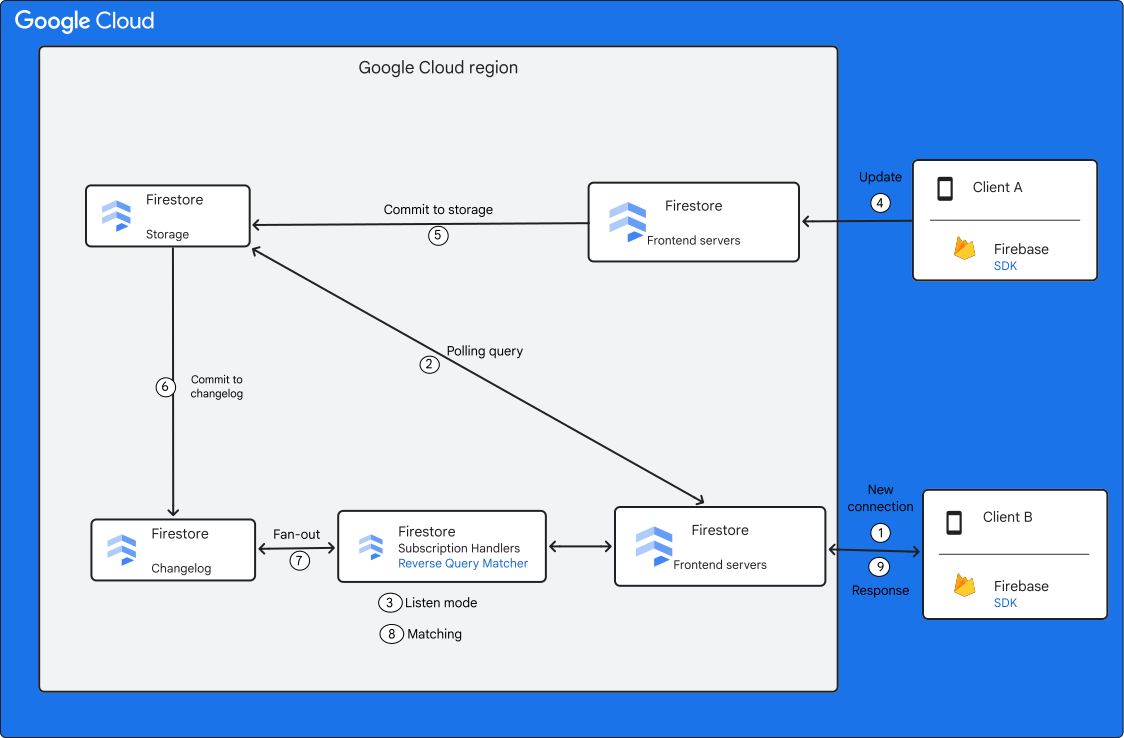
При подключении клиентом B обработчика снимков к базе данных происходит следующая последовательность событий:
- Клиент B устанавливает соединение с Cloud Firestore и регистрирует слушатель, вызывая метод
onSnapshot(collection("chatroom"))через SDK Firebase. Этот слушатель может оставаться активным в течение нескольких часов. - Интерфейс Cloud Firestore запрашивает данные у базовой системы хранения для инициализации набора данных. Он загружает весь набор результатов, соответствующих заданным документам. Мы называем это запросом на опрос . Затем система оценивает правила безопасности Firebase базы данных, чтобы убедиться, что пользователь имеет доступ к этим данным. Если пользователь авторизован, база данных возвращает ему данные.
- Затем запрос клиента B переходит в режим прослушивания . Прослушиватель регистрируется в обработчике подписок и ожидает обновления данных.
- Теперь клиент А отправляет операцию записи для изменения документа.
- База данных фиксирует изменения в документе в своей системе хранения.
- В транзакционном режиме система фиксирует это же обновление во внутреннем журнале изменений. Журнал изменений устанавливает строгий порядок внесения изменений по мере их появления.
- В свою очередь, список изменений распределяет обновленные данные между пулом обработчиков подписок.
- Обратный сопоставитель запросов проверяет, соответствует ли обновленный документ каким-либо зарегистрированным в данный момент обработчикам снимков. В этом примере документ соответствует обработчику снимков клиента B. Как следует из названия, обратный сопоставитель запросов можно рассматривать как обычный запрос к базе данных, но выполняемый в обратном порядке. Вместо поиска среди документов тех, которые соответствуют запросу, он эффективно ищет среди запросов те, которые соответствуют входящему документу. Найдя совпадение, система пересылает соответствующий документ обработчикам снимков. Затем система оценивает правила безопасности Firebase базы данных, чтобы гарантировать, что данные получат только авторизованные пользователи.
- Система пересылает обновление документа в SDK на устройстве клиента B, и срабатывает обратный вызов
onSnapshot. Если включено локальное сохранение данных, SDK также применяет обновление к локальному кэшу.
Ключевым элементом масштабируемости Cloud Firestore является распределение изменений от журнала изменений к обработчикам подписок и фронтенд-серверам. Это распределение позволяет эффективно распространять одно изменение данных для обработки миллионов запросов в реальном времени и обслуживания подключенных пользователей. Запуская множество реплик всех этих компонентов в нескольких зонах (или нескольких регионах в случае многорегионального развертывания), Cloud Firestore обеспечивает высокую доступность и масштабируемость.
Стоит отметить, что все операции чтения, выполняемые мобильными и веб-SDK, следуют описанной выше модели. Они выполняют запрос на опрос, за которым следует режим прослушивания для поддержания гарантий согласованности. Это также относится к слушателям в реальном времени, вызовам для получения документа и одноразовым запросам . Выполнение запросов на получение одного документа и одноразовых запросов можно рассматривать как кратковременные слушатели снимков, которые имеют аналогичные ограничения по производительности.
Применяйте лучшие практики масштабирования запросов в реальном времени.
Для проектирования масштабируемых запросов в режиме реального времени применяйте следующие передовые методы.
Разберитесь с высокой интенсивностью записи в системе.
Этот раздел поможет вам понять, как система реагирует на растущее число запросов на запись.
Журналы изменений Cloud Firestore , управляющие запросами в реальном времени, автоматически масштабируются горизонтально по мере увеличения объема записи. Когда скорость записи в базу данных превышает возможности одного сервера, журнал изменений распределяется между несколькими серверами, и обработка запросов начинает потреблять данные от нескольких обработчиков подписок вместо одного. С точки зрения клиента и SDK, все это происходит незаметно, и от приложения не требуется никаких действий при разделении. Следующая диаграмма демонстрирует масштабирование запросов в реальном времени:
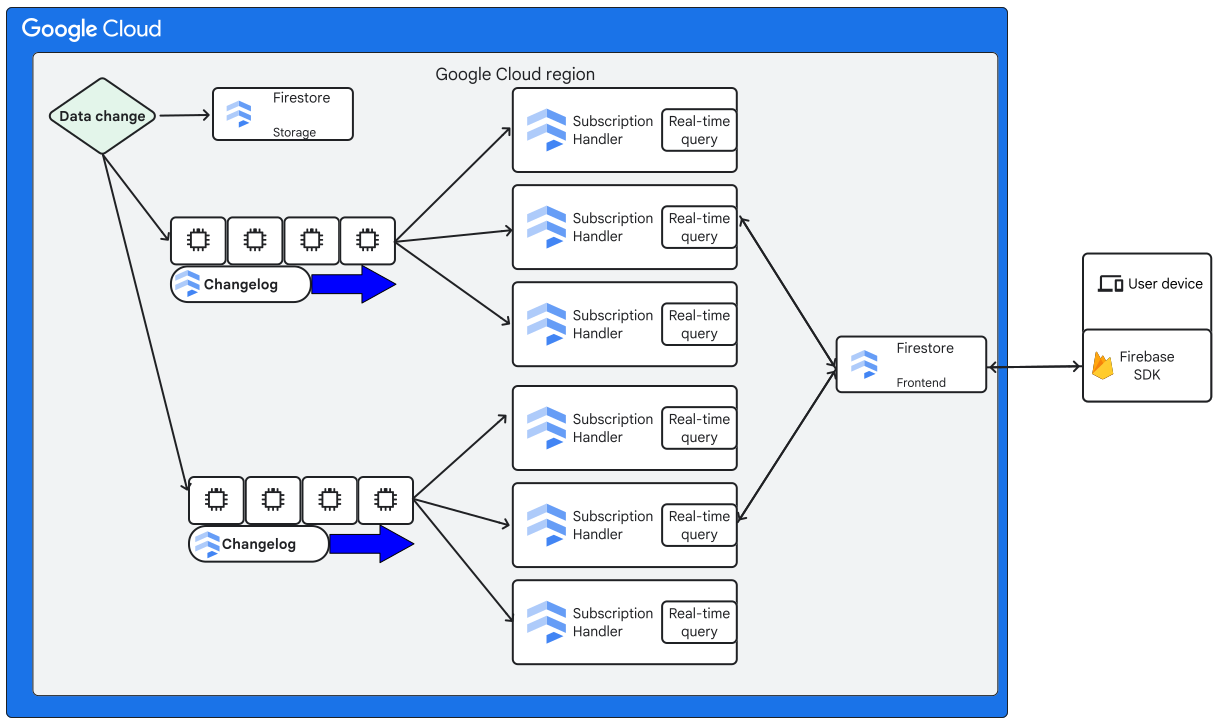
Автоматическое масштабирование позволяет неограниченно увеличивать объем операций записи, но по мере роста трафика системе может потребоваться некоторое время для ответа. Следуйте рекомендациям правила 5-5-5 , чтобы избежать создания «горячих точек» записи. Key Visualizer — полезный инструмент для анализа таких точек.
У многих приложений наблюдается предсказуемый органический рост, с которым Cloud Firestore может справиться без каких-либо мер предосторожности. Однако пакетные операции, такие как импорт большого набора данных, могут привести к слишком быстрому увеличению объема операций записи. При проектировании приложения следите за тем, откуда поступает трафик записи.
Поймите, как взаимодействуют письмо и чтение.
Систему запросов в реальном времени можно рассматривать как конвейер, соединяющий операции записи с читателями. Каждый раз, когда документ создается, обновляется или удаляется, изменение распространяется из системы хранения к зарегистрированным в данный момент слушателям. Структура журнала изменений Cloud Firestore гарантирует строгую согласованность, что означает, что ваше приложение никогда не получит уведомления об обновлениях, которые не соответствуют порядку их внесения в базу данных. Это упрощает разработку приложений, устраняя нестандартные ситуации, связанные с согласованностью данных.
Такая взаимосвязанная структура означает, что операция записи, вызывающая «горячие точки» или конфликты блокировок, может негативно повлиять на операции чтения. Когда операции записи завершаются с ошибкой или происходит ограничение скорости, чтение может застопориться в ожидании согласованных данных из журнала изменений. Если это произойдет в вашем приложении, вы можете наблюдать как замедление операций записи, так и, как следствие, замедление времени отклика запросов. Избегание «горячих точек» — ключ к предотвращению этой проблемы.
Держите документы и операции по написанию текстов под контролем и оптимизируйте их объем.
При разработке приложений с обработчиками снимков состояния обычно требуется, чтобы пользователи быстро узнавали об изменениях данных. Для этого старайтесь создавать небольшие файлы. Система может очень быстро обрабатывать небольшие документы с десятками полей. Более крупные документы с сотнями полей и большим объемом данных обрабатываются дольше.
Аналогично, отдавайте предпочтение коротким и быстрым операциям фиксации и записи, чтобы минимизировать задержку. Большие пакеты могут обеспечить более высокую пропускную способность с точки зрения записи, но на самом деле могут увеличить время уведомления для обработчиков снимков. Это часто противоречит интуиции по сравнению с использованием других систем баз данных, где пакетная обработка может повысить производительность.
Используйте эффективных слушателей.
По мере увеличения скорости записи в вашу базу данных Cloud Firestore распределяет обработку данных между множеством серверов. Алгоритм шардинга Cloud Firestore пытается разместить данные из одной и той же коллекции или группы коллекций на одном и том же сервере журнала изменений. Система стремится максимизировать возможную пропускную способность записи, сводя к минимуму количество серверов, участвующих в обработке запроса.
Однако некоторые шаблоны могут по-прежнему приводить к неоптимальному поведению обработчиков снимков. Например, если ваше приложение хранит большую часть своих данных в одной большой коллекции, обработчику может потребоваться подключиться ко многим серверам, чтобы получить все необходимые данные. Это остается верным даже при применении фильтра запроса. Подключение ко многим серверам увеличивает риск замедления ответа.
Чтобы избежать замедления отклика, разработайте схему и приложение таким образом, чтобы система могла обслуживать слушателей без обращения к множеству разных серверов. Возможно, лучше всего будет разбить ваши данные на более мелкие коллекции с меньшей частотой записи.
Это похоже на анализ производительности запросов в реляционной базе данных, требующих полного сканирования таблиц. В реляционной базе данных запрос, требующий полного сканирования таблицы, эквивалентен обработчику снимков, отслеживающему коллекцию с высокой частотой изменений. Он может работать медленнее по сравнению с запросом, который база данных может обработать, используя более специфический индекс. Запрос с более специфическим индексом подобен обработчику снимков, отслеживающему отдельный документ или коллекцию, которая изменяется реже. Вам следует провести нагрузочное тестирование вашего приложения, чтобы лучше понять поведение и потребности вашего варианта использования.
Обеспечьте быструю обработку запросов на опрос.
Еще один ключевой аспект оперативных запросов в реальном времени — обеспечение быстроты и эффективности запроса на загрузку данных. При первом подключении нового обработчика снимков, он должен загрузить весь набор результатов и отправить его на устройство пользователя. Медленные запросы снижают отзывчивость приложения. Это включает, например, запросы, которые пытаются прочитать множество документов, или запросы, которые не используют соответствующие индексы.
При определенных обстоятельствах слушатель может также перейти из состояния прослушивания в состояние опроса. Это происходит автоматически и не заметно для SDK и вашего приложения. Следующие условия могут инициировать переход в состояние опроса:
- Система перераспределяет изменения в журнале событий в связи с изменениями нагрузки.
- Наличие «горячих точек» приводит к сбоям или задержкам при записи в базу данных.
- Временные перезапуски сервера временно влияют на работу слушателей.
Если ваши запросы на опрос выполняются достаточно быстро, состояние опроса становится незаметным для пользователей вашего приложения.
Отдавайте предпочтение слушателям, которые живут долго.
Открытие и поддержание активных обработчиков событий как можно дольше часто является наиболее экономически эффективным способом создания приложения, использующего Cloud Firestore . При использовании Cloud Firestore вы платите за документы, возвращаемые вашему приложению, а не за поддержание открытого соединения. Обработчик событий с длительным сроком действия считывает только те данные, которые необходимы для обработки запроса на протяжении всего своего жизненного цикла. Это включает в себя первоначальную операцию опроса, за которой следуют уведомления при фактическом изменении данных. С другой стороны, одноразовые запросы повторно считывают данные, которые могли не измениться с момента последнего выполнения запроса приложением.
В случаях, когда ваше приложение должно обрабатывать большой объем данных, обработчики снимков могут быть неуместны. Например, если ваш сценарий использования предполагает передачу множества документов в секунду через соединение в течение длительного периода времени, возможно, лучше выбрать одноразовые запросы, выполняемые с меньшей частотой.
Что дальше?
- Узнайте , как использовать обработчики снимков .
- Узнайте больше о передовых методах .
Ознакомьтесь с этим документом, чтобы получить рекомендации по масштабированию вашего бессерверного приложения до уровня, превышающего тысячи операций в секунду или сотни тысяч одновременных пользователей. Этот документ содержит расширенные разделы, которые помогут вам глубоко понять систему. Если вы только начинаете работать с Cloud Firestore , обратитесь к руководству по быстрому запуску .
Cloud Firestore и мобильные/веб-SDK Firebase предоставляют мощную модель для разработки бессерверных приложений, где клиентский код напрямую обращается к базе данных. SDK позволяют клиентам отслеживать обновления данных в режиме реального времени. Вы можете использовать обновления в реальном времени для создания адаптивных приложений, не требующих серверной инфраструктуры. Хотя запустить приложение очень просто, полезно понимать ограничения систем, составляющих Cloud Firestore , чтобы ваше бессерверное приложение масштабировалось и хорошо работало при увеличении трафика.
В следующих разделах вы найдете советы по масштабированию вашего приложения.
Выберите местоположение базы данных, расположенное как можно ближе к вашим пользователям.
На следующей диаграмме представлена архитектура приложения реального времени:
Когда приложение, работающее на устройстве пользователя (мобильном или веб-приложении), устанавливает соединение с Cloud Firestore , это соединение перенаправляется на сервер Cloud Firestore расположенный в том же регионе , что и ваша база данных. Например, если ваша база данных находится в регионе us-east1 , соединение также направляется на сервер Cloud Firestore также расположенный в регионе us-east1 . Эти соединения являются долговременными и остаются открытыми до тех пор, пока приложение явно их не закроет. Сервер считывает данные из базовых систем хранения Cloud Firestore .
Расстояние между физическим местоположением пользователя и местоположением базы данных Cloud Firestore влияет на задержку, которую испытывает пользователь. Например, пользователь в Индии, чье приложение взаимодействует с базой данных в регионе Google Cloud в Северной Америке, может обнаружить, что работа приложения происходит медленнее, а скорость работы ниже, чем если бы база данных находилась ближе, например, в Индии или в другой части Азии.
Проектирование с учетом надежности
Следующие темы улучшают или влияют на надежность вашего приложения:
Включить автономный режим
SDK Firebase обеспечивают сохранение данных в автономном режиме. Если приложение на устройстве пользователя не может подключиться к Cloud Firestore , оно остается работоспособным, используя локально кэшированные данные. Это гарантирует доступ к данным даже при нестабильном интернет-соединении или полной потере доступа на несколько часов или дней. Более подробную информацию об автономном режиме см. в разделе «Включение автономных данных» .
Разберитесь с автоматическими повторными попытками.
SDK Firebase берут на себя повторные попытки выполнения операций и восстановление разорванных соединений. Это помогает обойти временные ошибки, вызванные перезапуском серверов или проблемами в сети между клиентом и базой данных.
Выберите между региональными и многорегиональными локациями.
При выборе между региональным и многорегиональным размещением данных приходится идти на компромиссы. Главное различие заключается в способе репликации данных. Это определяет гарантии доступности вашего приложения. Многорегиональный экземпляр обеспечивает более высокую надежность обслуживания и повышает отказоустойчивость данных, но платой за это является стоимость.
Разберитесь в системе обработки запросов в реальном времени.
Запросы в реальном времени, также называемые обработчиками снимков, позволяют приложению отслеживать изменения в базе данных и получать уведомления с низкой задержкой, как только данные изменятся. Приложение может получить тот же результат, периодически опрашивая базу данных на наличие обновлений, но это часто медленнее, дороже и требует больше кода. Примеры настройки и использования запросов в реальном времени см. в разделе «Получение обновлений в реальном времени» . В следующих разделах подробно рассматривается принцип работы обработчиков снимков и описываются некоторые лучшие практики масштабирования запросов в реальном времени при сохранении производительности.
Представьте себе двух пользователей, которые подключаются к Cloud Firestore через приложение для обмена сообщениями, созданное с использованием одного из мобильных SDK.
Клиент А записывает данные в базу данных для добавления и обновления документов в коллекции под названием chatroom :
collection chatroom:
    document message1:
      from: 'Sparky'
      message: 'Welcome to Cloud Firestore!'

    document message2:
      from: 'Santa'
      message: 'Presents are coming'
Клиент B отслеживает обновления в той же коллекции, используя обработчик снимков. Клиент B получает немедленное уведомление всякий раз, когда кто-то создает новое сообщение. На следующей диаграмме показана архитектура обработчика снимков:
При подключении клиентом B обработчика снимков к базе данных происходит следующая последовательность событий:
- Клиент B устанавливает соединение с Cloud Firestore и регистрирует слушатель, вызывая метод
onSnapshot(collection("chatroom"))через SDK Firebase. Этот слушатель может оставаться активным в течение нескольких часов. - Интерфейс Cloud Firestore запрашивает данные у базовой системы хранения для инициализации набора данных. Он загружает весь набор результатов, соответствующих заданным документам. Мы называем это запросом на опрос . Затем система оценивает правила безопасности Firebase базы данных, чтобы убедиться, что пользователь имеет доступ к этим данным. Если пользователь авторизован, база данных возвращает ему данные.
- Затем запрос клиента B переходит в режим прослушивания . Прослушиватель регистрируется в обработчике подписок и ожидает обновления данных.
- Теперь клиент А отправляет операцию записи для изменения документа.
- База данных фиксирует изменения в документе в своей системе хранения.
- В транзакционном режиме система фиксирует это же обновление во внутреннем журнале изменений. Журнал изменений устанавливает строгий порядок внесения изменений по мере их появления.
- В свою очередь, список изменений распределяет обновленные данные между пулом обработчиков подписок.
- Обратный сопоставитель запросов проверяет, соответствует ли обновленный документ каким-либо зарегистрированным в данный момент обработчикам снимков. В этом примере документ соответствует обработчику снимков клиента B. Как следует из названия, обратный сопоставитель запросов можно рассматривать как обычный запрос к базе данных, но выполняемый в обратном порядке. Вместо поиска среди документов тех, которые соответствуют запросу, он эффективно ищет среди запросов те, которые соответствуют входящему документу. Найдя совпадение, система пересылает соответствующий документ обработчикам снимков. Затем система оценивает правила безопасности Firebase базы данных, чтобы гарантировать, что данные получат только авторизованные пользователи.
- Система пересылает обновление документа в SDK на устройстве клиента B, и срабатывает обратный вызов
onSnapshot. Если включено локальное сохранение данных, SDK также применяет обновление к локальному кэшу.
Ключевым элементом масштабируемости Cloud Firestore является распределение изменений от журнала изменений к обработчикам подписок и фронтенд-серверам. Это распределение позволяет эффективно распространять одно изменение данных для обработки миллионов запросов в реальном времени и обслуживания подключенных пользователей. Запуская множество реплик всех этих компонентов в нескольких зонах (или нескольких регионах в случае многорегионального развертывания), Cloud Firestore обеспечивает высокую доступность и масштабируемость.
Стоит отметить, что все операции чтения, выполняемые мобильными и веб-SDK, следуют описанной выше модели. Они выполняют запрос на опрос, за которым следует режим прослушивания для поддержания гарантий согласованности. Это также относится к слушателям в реальном времени, вызовам для получения документа и одноразовым запросам . Выполнение запросов на получение одного документа и одноразовых запросов можно рассматривать как кратковременные слушатели снимков, которые имеют аналогичные ограничения по производительности.
Применяйте лучшие практики масштабирования запросов в реальном времени.
Для проектирования масштабируемых запросов в режиме реального времени применяйте следующие передовые методы.
Разберитесь с высокой интенсивностью записи в системе.
Этот раздел поможет вам понять, как система реагирует на растущее число запросов на запись.
Журналы изменений Cloud Firestore , управляющие запросами в реальном времени, автоматически масштабируются горизонтально по мере увеличения объема записи. Когда скорость записи в базу данных превышает возможности одного сервера, журнал изменений распределяется между несколькими серверами, и обработка запросов начинает потреблять данные от нескольких обработчиков подписок вместо одного. С точки зрения клиента и SDK, все это происходит незаметно, и от приложения не требуется никаких действий при разделении. Следующая диаграмма демонстрирует масштабирование запросов в реальном времени:
Автоматическое масштабирование позволяет неограниченно увеличивать объем операций записи, но по мере роста трафика системе может потребоваться некоторое время для ответа. Следуйте рекомендациям правила 5-5-5 , чтобы избежать создания «горячих точек» записи. Key Visualizer — полезный инструмент для анализа таких точек.
У многих приложений наблюдается предсказуемый органический рост, с которым Cloud Firestore может справиться без каких-либо мер предосторожности. Однако пакетные операции, такие как импорт большого набора данных, могут привести к слишком быстрому увеличению объема операций записи. При проектировании приложения следите за тем, откуда поступает трафик записи.
Поймите, как взаимодействуют письмо и чтение.
Систему запросов в реальном времени можно рассматривать как конвейер, соединяющий операции записи с читателями. Каждый раз, когда документ создается, обновляется или удаляется, изменение распространяется из системы хранения к зарегистрированным в данный момент слушателям. Структура журнала изменений Cloud Firestore гарантирует строгую согласованность, что означает, что ваше приложение никогда не получит уведомления об обновлениях, которые не соответствуют порядку их внесения в базу данных. Это упрощает разработку приложений, устраняя нестандартные ситуации, связанные с согласованностью данных.
Такая взаимосвязанная структура означает, что операция записи, вызывающая «горячие точки» или конфликты блокировок, может негативно повлиять на операции чтения. Когда операции записи завершаются с ошибкой или происходит ограничение скорости, чтение может застопориться в ожидании согласованных данных из журнала изменений. Если это произойдет в вашем приложении, вы можете наблюдать как замедление операций записи, так и, как следствие, замедление времени отклика запросов. Избегание «горячих точек» — ключ к предотвращению этой проблемы.
Держите документы и операции по написанию текстов под контролем и оптимизируйте их объем.
При разработке приложений с обработчиками снимков состояния обычно требуется, чтобы пользователи быстро узнавали об изменениях данных. Для этого старайтесь создавать небольшие файлы. Система может очень быстро обрабатывать небольшие документы с десятками полей. Более крупные документы с сотнями полей и большим объемом данных обрабатываются дольше.
Аналогично, отдавайте предпочтение коротким и быстрым операциям фиксации и записи, чтобы минимизировать задержку. Большие пакеты могут обеспечить более высокую пропускную способность с точки зрения записи, но на самом деле могут увеличить время уведомления для обработчиков снимков. Это часто противоречит интуиции по сравнению с использованием других систем баз данных, где пакетная обработка может повысить производительность.
Используйте эффективных слушателей.
По мере увеличения скорости записи в вашу базу данных Cloud Firestore распределяет обработку данных между множеством серверов. Алгоритм шардинга Cloud Firestore пытается разместить данные из одной и той же коллекции или группы коллекций на одном и том же сервере журнала изменений. Система стремится максимизировать возможную пропускную способность записи, сводя к минимуму количество серверов, участвующих в обработке запроса.
Однако некоторые шаблоны могут по-прежнему приводить к неоптимальному поведению обработчиков снимков. Например, если ваше приложение хранит большую часть своих данных в одной большой коллекции, обработчику может потребоваться подключиться ко многим серверам, чтобы получить все необходимые данные. Это остается верным даже при применении фильтра запроса. Подключение ко многим серверам увеличивает риск замедления ответа.
Чтобы избежать замедления отклика, разработайте схему и приложение таким образом, чтобы система могла обслуживать слушателей без обращения к множеству разных серверов. Возможно, лучше всего будет разбить ваши данные на более мелкие коллекции с меньшей частотой записи.
Это похоже на анализ производительности запросов в реляционной базе данных, требующих полного сканирования таблиц. В реляционной базе данных запрос, требующий полного сканирования таблицы, эквивалентен обработчику снимков, отслеживающему коллекцию с высокой частотой изменений. Он может работать медленнее по сравнению с запросом, который база данных может обработать, используя более специфический индекс. Запрос с более специфическим индексом подобен обработчику снимков, отслеживающему отдельный документ или коллекцию, которая изменяется реже. Вам следует провести нагрузочное тестирование вашего приложения, чтобы лучше понять поведение и потребности вашего варианта использования.
Обеспечьте быструю обработку запросов на опрос.
Еще один ключевой аспект оперативных запросов в реальном времени — обеспечение быстроты и эффективности запроса на загрузку данных. При первом подключении нового обработчика снимков, он должен загрузить весь набор результатов и отправить его на устройство пользователя. Медленные запросы снижают отзывчивость приложения. Это включает, например, запросы, которые пытаются прочитать множество документов, или запросы, которые не используют соответствующие индексы.
При определенных обстоятельствах слушатель может также перейти из состояния прослушивания в состояние опроса. Это происходит автоматически и не заметно для SDK и вашего приложения. Следующие условия могут инициировать переход в состояние опроса:
- Система перераспределяет изменения в журнале событий в связи с изменениями нагрузки.
- Наличие «горячих точек» приводит к сбоям или задержкам при записи в базу данных.
- Временные перезапуски сервера временно влияют на работу слушателей.
Если ваши запросы на опрос выполняются достаточно быстро, состояние опроса становится незаметным для пользователей вашего приложения.
Отдавайте предпочтение слушателям, которые живут долго.
Открытие и поддержание активных обработчиков событий как можно дольше часто является наиболее экономически эффективным способом создания приложения, использующего Cloud Firestore . При использовании Cloud Firestore вы платите за документы, возвращаемые вашему приложению, а не за поддержание открытого соединения. Обработчик событий с длительным сроком действия считывает только те данные, которые необходимы для обработки запроса на протяжении всего своего жизненного цикла. Это включает в себя первоначальную операцию опроса, за которой следуют уведомления при фактическом изменении данных. С другой стороны, одноразовые запросы повторно считывают данные, которые могли не измениться с момента последнего выполнения запроса приложением.
В случаях, когда ваше приложение должно обрабатывать большой объем данных, обработчики снимков могут быть неуместны. Например, если ваш сценарий использования предполагает передачу множества документов в секунду через соединение в течение длительного периода времени, возможно, лучше выбрать одноразовые запросы, выполняемые с меньшей частотой.
Что дальше?
- Узнайте , как использовать обработчики снимков .
- Узнайте больше о передовых методах .
Ознакомьтесь с этим документом, чтобы получить рекомендации по масштабированию вашего бессерверного приложения до уровня, превышающего тысячи операций в секунду или сотни тысяч одновременных пользователей. Этот документ содержит расширенные разделы, которые помогут вам глубоко понять систему. Если вы только начинаете работать с Cloud Firestore , обратитесь к руководству по быстрому запуску .
Cloud Firestore и мобильные/веб-SDK Firebase предоставляют мощную модель для разработки бессерверных приложений, где клиентский код напрямую обращается к базе данных. SDK позволяют клиентам отслеживать обновления данных в режиме реального времени. Вы можете использовать обновления в реальном времени для создания адаптивных приложений, не требующих серверной инфраструктуры. Хотя запустить приложение очень просто, полезно понимать ограничения систем, составляющих Cloud Firestore , чтобы ваше бессерверное приложение масштабировалось и хорошо работало при увеличении трафика.
В следующих разделах вы найдете советы по масштабированию вашего приложения.
Выберите местоположение базы данных, расположенное как можно ближе к вашим пользователям.
На следующей диаграмме представлена архитектура приложения реального времени:
Когда приложение, работающее на устройстве пользователя (мобильном или веб-приложении), устанавливает соединение с Cloud Firestore , это соединение перенаправляется на сервер Cloud Firestore расположенный в том же регионе , что и ваша база данных. Например, если ваша база данных находится в регионе us-east1 , соединение также направляется на сервер Cloud Firestore также расположенный в регионе us-east1 . Эти соединения являются долговременными и остаются открытыми до тех пор, пока приложение явно их не закроет. Сервер считывает данные из базовых систем хранения Cloud Firestore .
The distance between a user's physical location and the Cloud Firestore database location affects the latency experienced by the user. For example, a user in India whose app talks to a database in a Google Cloud region in North America might find the experience slower and the app less snappy than if the database was instead located closer, such as in India or in another part of Asia.
Design for reliability
The following topics improve or affect your app's reliability:
Включить автономный режим
The Firebase SDKs provide offline data persistence. If the app on the user's device can't connect to Cloud Firestore , the app remains usable by working with locally cached data. This ensures data access even when users experience spotty internet connections or completely lose access for several hours or days. For more details on offline mode, see Enable offline data .
Understand automatic retries
The Firebase SDKs take care of retrying operations and re-establishing broken connections. This helps work around transient errors caused by restarting servers or network issues between the client and the database.
Choose between regional and multi-regional locations
There are several trade-offs when choosing between regional and multi-regional locations. The main difference is how data is replicated. This drives the availability guarantees of your app. A multi-region instance gives stronger serving reliability and increases the durability of your data but the trade-off is cost.
Understand the real-time query system
Real-time queries, also called snapshot listeners, let the app listen to changes in the database and get low-latency notifications as soon as the data changes. An app can get the same result by periodically polling the database for updates, but it's often slower, more expensive, and requires more code. For examples of how to set up and use real-time queries, see Get real-time updates . The following sections get into details of how snapshot listeners work and describe some of the best practices for scaling real-time queries while retaining performance.
Imagine two users that connect to Cloud Firestore through a messaging app built with one of the mobile SDKs.
Client A writes to the database to add and update documents in a collection called chatroom :
collection chatroom:
    document message1:
      from: 'Sparky'
      message: 'Welcome to Cloud Firestore!'

    document message2:
      from: 'Santa'
      message: 'Presents are coming'
Client B listens for updates in the same collection using a snapshot listener. Client B gets an immediate notification whenever someone creates a new message. The following diagram shows the architecture behind a snapshot listener:
The following sequence of events takes place when Client B connects a snapshot listener to the database:
- Client B opens a connection to Cloud Firestore and registers a listener by making a call to
onSnapshot(collection("chatroom"))through the Firebase SDK. This listener can stay active for hours. - The Cloud Firestore frontend queries the underlying storage system to bootstrap the dataset. It loads the entire result set of matching documents. We refer to this as a polling query . The system then evaluates the database's Firebase Security Rules to verify that the user can access this data. If the user is authorized, the database returns the data to the user.
- Client B's query then moves into listen mode . The listener registers with a subscription handler and waits for updates to the data.
- Client A now sends a write operation to modify a document.
- The database commits the document change to its storage system.
- Transactionally, the system commits the same update to an internal changelog. The changelog establishes a strict ordering of changes as they happen.
- The changelog in turn fans out the updated data to a pool of subscription handlers.
- A reverse query matcher executes to see if the updated document matches any currently registered snapshot listeners. In this example, the document matches Client B's snapshot listener. As the name implies, you can think of the reverse query matcher as a normal database query but done in reverse. Instead of searching through documents to find those that match a query, it efficiently searches through queries to find those that match an incoming document. Upon finding a match, the system forwards the document in question to the snapshot listeners. Then the system evaluates the database's Firebase Security Rules to ensure that only authorized users receive the data.
- The system forwards the document update to the SDK on client B's device, and the
onSnapshotcallback fires. If local persistence is enabled, the SDK applies the update to the local cache as well.
A key part of Cloud Firestore 's scalability depends on the fan-out from the changelog to the subscription handlers and the frontend servers. The fan-out lets a single data change to propagate efficiently to serve millions of real-time queries and connected users. By running many replicas of all these components across multiple zones (or multiple regions in the case of a multi-region deployment), Cloud Firestore achieves high availability and scalability.
It's worth noting that all read operations issued from mobile and web SDKs follow the model above. They perform a polling query followed by listen mode to maintain consistency guarantees. This also applies to real-time listeners, calls to retrieve a document, and one-shot queries . You can think of single document retrievals and one-shot queries as short-lived snapshot listeners that come with similar constraints around performance.
Apply best practices for scaling real-time queries
Apply the following best practices to design scalable real-time queries.
Understand high write traffic in the system
This section helps you understand how the system responds to an increasing number of write requests.
The Cloud Firestore changelogs that drive the real-time queries automatically scale horizontally as write traffic increases. As the write rate for a database increases beyond what a single server can handle, the changelog is split across multiple servers, and the query processing starts to consume data from multiple subscription handlers instead of one. From the client and SDK's perspective, this is all transparent and no action is required from the app when splits happen. The following diagram demonstrates how real-time queries scale:
Automatic scaling allows you to increase your write traffic without limits, but as the traffic ramps up, the system might take some time to respond. Follow the recommendations of the 5-5-5 rule to avoid creating a write hotspot. Key Visualizer is a useful tool for analyzing write hotspots.
Many apps have predictable organic growth, which Cloud Firestore can accommodate without precautions. Batch workloads like importing a large dataset, however, can ramp up writes too quickly. As you design your app, stay aware of where your write traffic comes from.
Understand how writes and reads interact
You can think of the real-time query system as a pipeline connecting write operations with readers. Any time a document is created, updated, or deleted, the change propagates from the storage system to the currently registered listeners. Cloud Firestore 's changelog structure guarantees strong consistency, which means that your app never receives notifications of updates that are out of order compared to when the database committed the data changes. This simplifies app development by removing edge cases around data consistency.
This connected pipeline means that a write operation causing hotspots or lock contention can negatively affect read operations. When write operations fail or experience throttling, a read might stall waiting for consistent data from the changelog. If this happens in your app, you might see both slow write operations and correlated slow response times for queries. Avoiding hotspots is the key to steering clear of this problem.
Keep documents and write operations small
When building apps with snapshot listeners, you typically want users to find out about data changes quickly. To achieve this, try to keep things small. The system can push small documents with tens of fields through the system very quickly. Larger documents with hundreds of fields and large data take longer to process.
Likewise, favor short, fast commit and write operations to keep latency low. Large batches might give you higher throughput from the writer's perspective but might actually increase the notification time for snapshot listeners. This is often counterintuitive compared to using other database systems where you might use batching to improve performance.
Use efficient listeners
As the write rates for your database increase, Cloud Firestore splits the data processing across many servers. Cloud Firestore 's sharding algorithm tries to co-locate data from the same collection or collection group onto the same changelog server. The system tries to maximize the possible write throughput while keeping the number of servers involved in the processing of a query as low as possible.
However, certain patterns might still lead to suboptimal behavior for snapshot listeners. For example, if your app stores most of its data in one large collection, the listener might need to connect to many server to receive all data it needs. This remains true even if you apply a query filter. Connecting to many servers increases the risk of slower responses.
To avoid these slower responses, design your schema and app so that the system can serve listeners without going to many different servers. It might work best to break your data into smaller collections with smaller write rates.
This is similar to thinking about the performance queries in a relational database that require full table scans. In a relational database, a query that requires a full table scan is the equivalent of a snapshot listener that watches a high-churn collection. It might perform slowly compared to a query that the database can serve using a more specific index. A query with a more specific index is like a snapshot listener that watches a single document or a collection that changes less often. You should load test your app to best understand the behavior and need of your use case.
Keep polling queries fast
Another key part of responsive real-time queries involves making sure that the polling query to bootstrap the data is fast and efficient. The first time a new snapshot listener connects, the listener must load the entire result set and send it to the user's device. Slow queries make your app less responsive. This includes, for example, queries that try to read many documents or queries that don't use the appropriate indexes.
A listener might also move back from a listening state to a polling state under some circumstances. This happens automatically and is transparent to the SDKs and your app. The following conditions might trigger a polling state:
- The system re-balances a changelog due to changes in load.
- Hotspots cause failed or delayed writes to the database.
- Transient server restarts temporarily affect listeners.
If your polling queries are fast enough, a polling state becomes transparent to your app's users.
Favor long-lived listeners
Opening and keeping listeners alive for as long as possible is often the most cost-effective way to build an app that uses Cloud Firestore . When using Cloud Firestore , you are billed for the documents returned to your app and not for maintaining an open connection. A long-lived snapshot listener reads only the data it needs to serve the query throughout its lifetime. This includes an initial polling operation followed by notifications when the data actually changes. One-shot queries, on the other hand, re-read data that may not have changed since the app last executed the query.
In cases where your app must consume a high rate of data, snapshot listeners might not be appropriate. For example, if your use case pushes many documents per second through a connection for an extended period of time, it might be better to opt for one-shot queries that run at a lower frequency.
Что дальше?
- Learn how to use snapshot listeners .
- Read about more best practices .